

States and cities sued to block a broader public charge policy that could make public-benefit use more significant in some green card and admission decisions. The lawsuits, filed on September 14, 2026, seek to stop the rule before its scheduled September 18 effective date.
Two Coalitions Go to Court
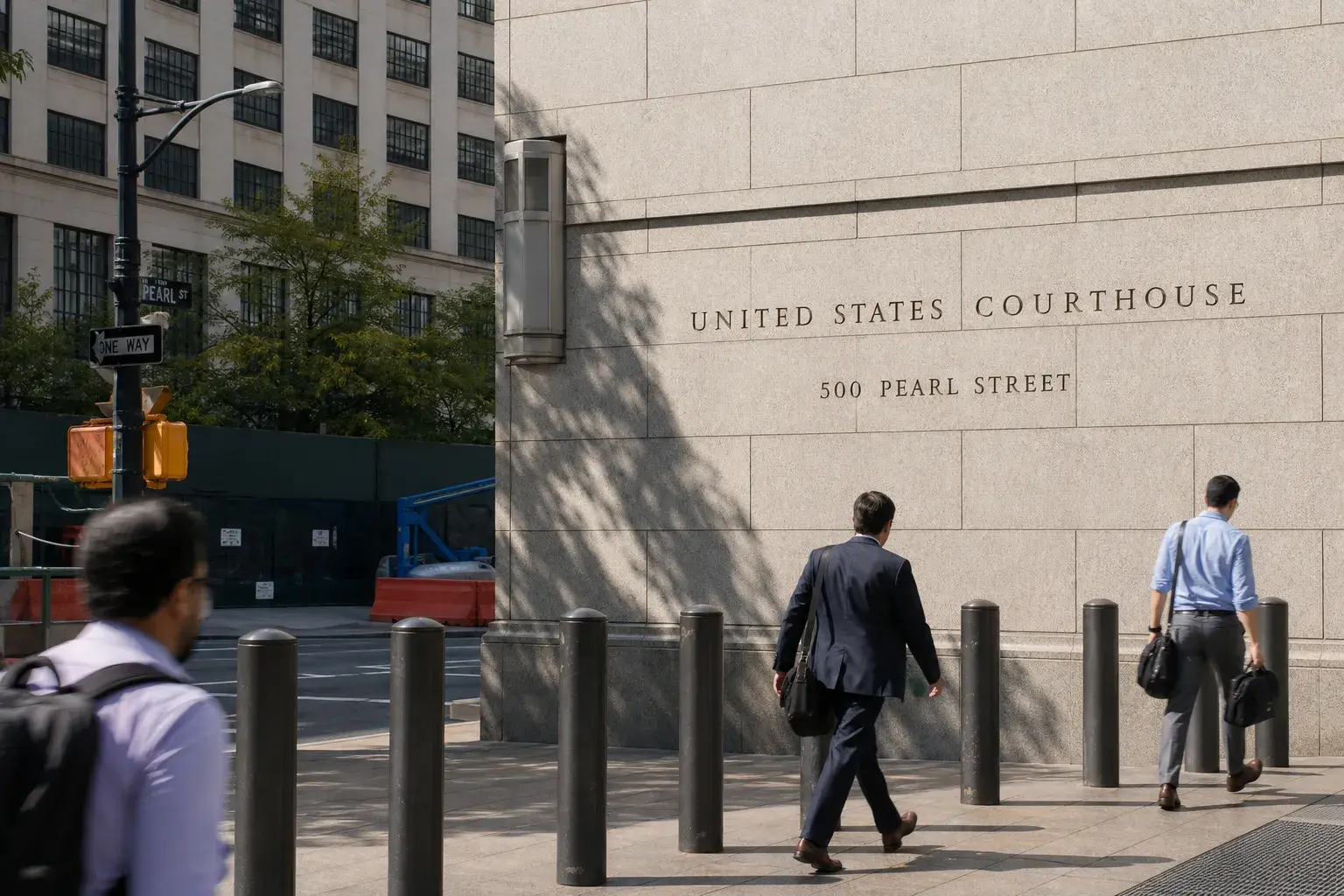
One lawsuit was brought by New York, 21 other states and the District of Columbia. A separate challenge came from New York City, Chicago, Seattle, San Francisco, Santa Clara County, King County and the Public Rights Project. Both cases were filed in the U.S. District Court for the Southern District of New York.
The plaintiffs argue that the Department of Homeland Security exceeded its authority and violated the Administrative Procedure Act. They say the new framework gives immigration officers too much discretion and does not clearly define which income-based federal, state or local benefits may influence a decision.
The lawsuits do not automatically suspend the rule. Unless a court intervenes, it is scheduled to apply to covered applications for admission made on or after September 18, 2026, as well as adjustment-of-status applications postmarked or electronically submitted on or after that date.
How the Rule Changes Reviews
The Immigration and Nationality Act permits the government to find certain applicants inadmissible if officials determine they are likely to become a “public charge.” The Biden administration’s 2022 regulation generally focused the analysis on likely primary dependence demonstrated through cash assistance for income maintenance or government-funded long-term institutional care.
The Trump administration rescinded that regulation in July 2026. DHS said the narrower policy prevented officers from examining all relevant facts. Under the replacement framework, USCIS officers will make individualized decisions based on the totality of an applicant’s circumstances and may consider a wider range of public-benefit information.
USCIS also said it will issue a revised Form I-485. Older I-485 editions will not be accepted after the effective date when postmarked or submitted electronically on or after September 18, 2026.
What Applicants Should Know
The change may be particularly relevant to international students and professionals planning to pursue permanent residence after studying or working in the United States. However, receiving a benefit does not necessarily produce an automatic denial; public charge reviews are individualized, and the legal provision does not apply identically to every immigration pathway.
The state and local plaintiffs warn that uncertainty could discourage eligible families, including mixed-status households, from using health, nutrition and housing programs. DHS says the change restores congressional intent, promotes self-reliance and allows officers to consider pertinent facts case by case.
Applicants should verify which form edition applies to their filing and seek qualified immigration advice before changing benefit enrollment or submitting an adjustment application.
This article provides general information and is not legal advice.
Sources
- Trump's swing at green card holders on public benefits is facing a slew of lawsuits — Business Insider (September 14, 2026)
- States, cities sue over Trump rule seeking to deny green cards to immigrants using public benefits — Associated Press (September 14, 2026)
- Public Charge Ground of Inadmissibility — Federal Register (July 20, 2026)
- New York City Leads Cities and Counties in Lawsuit Challenging Federal Government’s New Public Charge Rule — New York City Mayor’s Office (September 14, 2026)

Share
Trump Revives ‘Public Charge’ Rule, Tightening Green Card Reviews
DOJ Sues Three States Over In-State Tuition Policies

No Comments Yet
Let us know what you think