

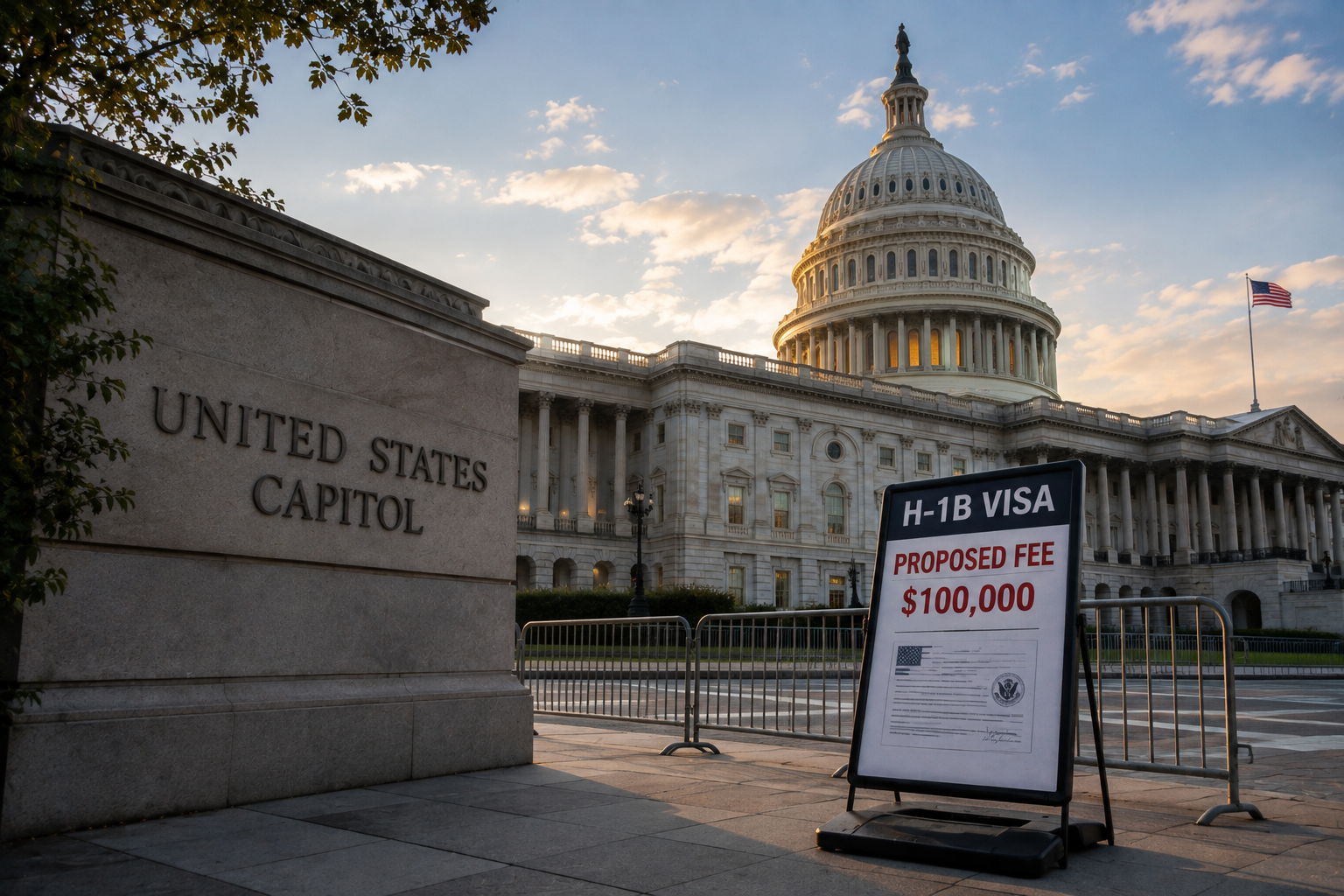
Only about 70 U.S. employers have paid the new $100,000 H‑1B fee, according to government testimony this week, underscoring how a sweeping policy has chilled demand and set up a pivotal court test over presidential power and skilled-worker visas.
What Happened?
At a February 26 hearing in Oakland, a Justice Department attorney told a federal judge that roughly 70 employers have paid the charge since it was introduced last fall. The statement came in a case brought by nurse-recruiting firm Global Nurse Force and others, who argue the fee effectively shuts out small and midsize employers from the H‑1B program. Government lawyers countered that the limited uptake undercuts claims that the fee is a tax rather than a regulatory measure. Judge Haywood S. Gilliam Jr. did not rule on the plaintiffs’ request for a preliminary injunction and asked both sides to brief how a recent Supreme Court decision bears on the dispute. The fee was imposed via a September 19, 2025, proclamation and applies to H‑1B workers entering from abroad.
Legal Backdrop
The Oakland case is one of several challenges. A federal judge denied an injunction on December 23, 2025, in a separate lawsuit led by the U.S. Chamber of Commerce in Washington, D.C., and that case is now on appeal. Democratic-led states, including California, have backed the challengers in court filings, saying the six‑figure charge would worsen shortages in fields like health care and education. The administration argues the Immigration and Nationality Act allows the president to condition entry and that a proclamation isn’t subject to standard rulemaking procedures.
The Bigger Picture
The fight is unfolding just days after the Supreme Court curtailed the president’s emergency tariff powers in Learning Resources v. Trump. In that February 20 ruling, the justices said the executive cannot levy broad revenue-raising measures without clear congressional authorization. Plaintiffs say the logic applies here; the government says the H‑1B charge regulates, rather than taxes. The Supreme Court struck down Trump’s emergency tariffs on February 20, 2026, a decision now rippling into immigration litigation.
What’s Next?
Judge Gilliam has requested additional briefing on how the tariff ruling affects the H‑1B fee case and declined to pause proceedings pending the D.C. appeal. Employers, particularly smaller firms and health‑care recruiters, are watching closely: an injunction could reopen immediate hiring pathways, while an eventual ruling on the merits will shape how far presidents can go in reshaping work‑visa programs without Congress.
Sources
- Few US Businesses Have Paid $100,000 Fee to Hire H-1B Workers — Bloomberg Law (February 27, 2026)
- Trump Slams Justices After Supreme Court Strikes Down Most of His Tariffs — Washington Post (February 20, 2026)
- Trump’s $100,000 H-1B Worker Fee Allowed in US Chamber Loss — Bloomberg Law (December 24, 2025)
- California AG Urges Court to Block $100k H-1B Fee — State of California DOJ (December 23, 2025)


Share
Trump Extends $100,000 H-1B Fee Despite Court Block
Trump Revives H-1B Fee Plan With $103,265 Proposal

No Comments Yet
Let us know what you think