

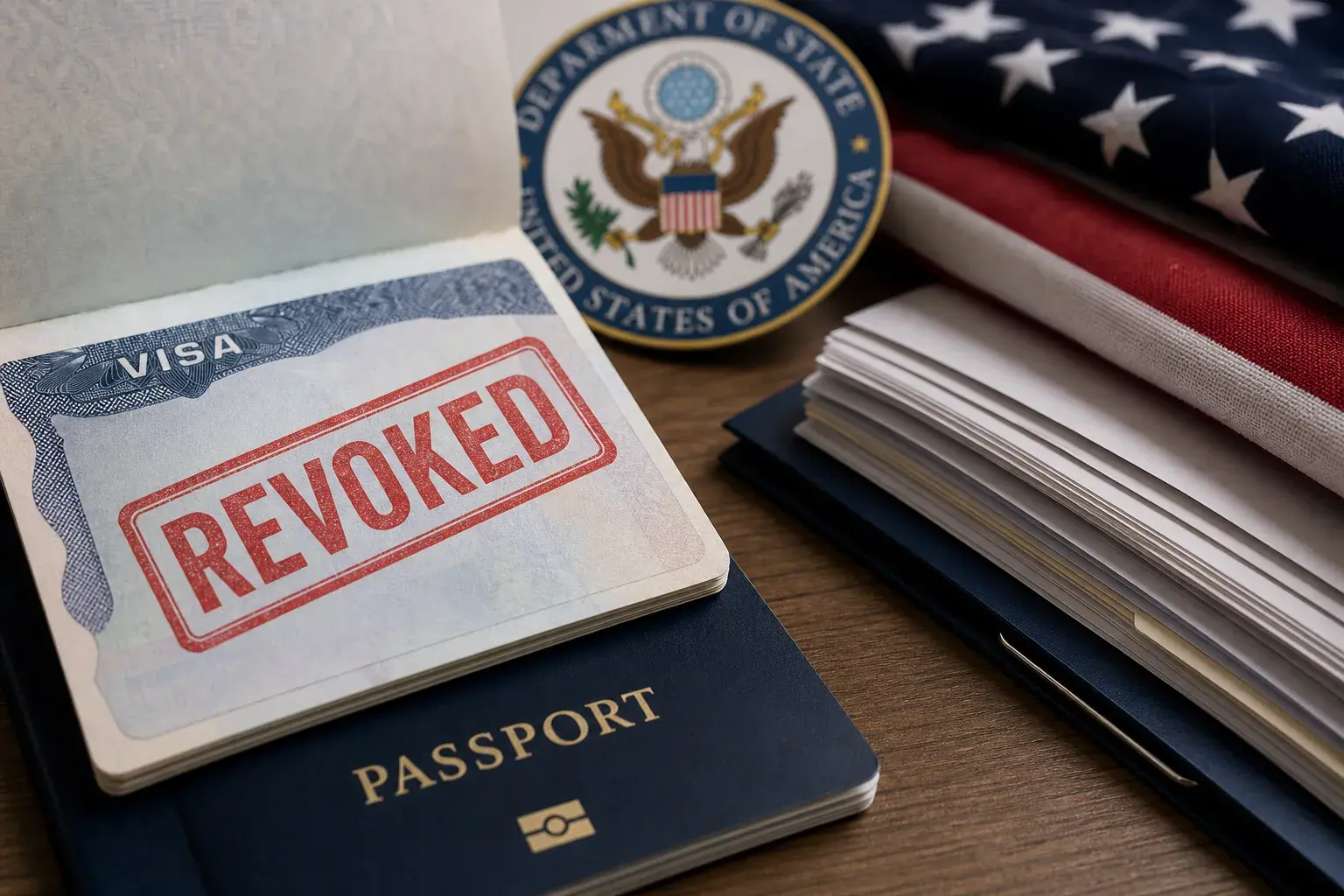
The Trump administration is preparing a sweeping revocation of visitor visas held by as many as 200,000 foreign nationals who have applied for asylum in the United States. If implemented at that scale, the action would be the largest single mass visa revocation in U.S. history.
Who Could Be Affected
The State Department is expected to announce the revocations in the coming weeks, according to an Associated Press report published on August 24, 2026. The reported plan covers B-1 business and B-2 tourism visas issued between 2016 and 2026 to people who previously sought asylum or have asylum cases pending.
The department is coordinating with the Department of Homeland Security to identify affected visa holders. State Department spokesperson Tommy Pigott confirmed that coordination but did not verify the estimate of 200,000 people, saying the total would remain dynamic as revocations proceed on a rolling basis.
The reported action has not yet been finalized and could be revised or challenged before full implementation. The AP reported that officials expect legal challenges if the government moves forward.
What Revocation Means
B-1 and B-2 visas are intended for temporary visits. B-1 visas generally cover activities such as meetings, conferences and contract negotiations, while B-2 visas cover tourism, family visits and certain medical treatment.
A visa is primarily a document used to travel to a U.S. port of entry and request admission. It is not the same as the period of authorized stay recorded by Customs and Border Protection or USCIS. For that reason, revocation would not automatically mean immediate deportation, according to the officials cited by the AP.
People with pending asylum cases may lose their classification as business or tourism visitors while their asylum proceedings continue. The precise consequences would depend on each person’s immigration history, authorized stay, pending applications and any future enforcement guidance.
Implications for Students and Professionals
As currently reported, the plan specifically targets B-1 and B-2 visas rather than broadly covering F-1 student, J-1 exchange visitor or H-1B employment visas. However, an international student or professional who originally entered with a visitor visa and later applied for asylum could potentially fall within the identified group.
Affected travelers may also face complications if they leave the United States because a revoked visa generally cannot be used to seek reentry. Anyone who receives a revocation notice should review the notice carefully and consider obtaining advice from a qualified immigration attorney before traveling or making decisions about an asylum case.
This article provides general information and is not legal advice. Individual immigration consequences vary by case.
Sources
- US set for largest mass visa revocation in history targeting up to 200,000 foreigners, officials say — Associated Press (August 24, 2026)
- Trump Administration Preparing For Largest Visa Revocation In U.S. History, Report Says — Forbes (August 24, 2026)
- Visitor Visa — U.S. Department of State (accessed August 25, 2026)

Share

U.S. Makes Visa Bond Program Permanent With $20,000 Maximum

U.S. Visitor Visa Waits Near One Year in Hyderabad, Mumbai
No Comments Yet
Let us know what you think