

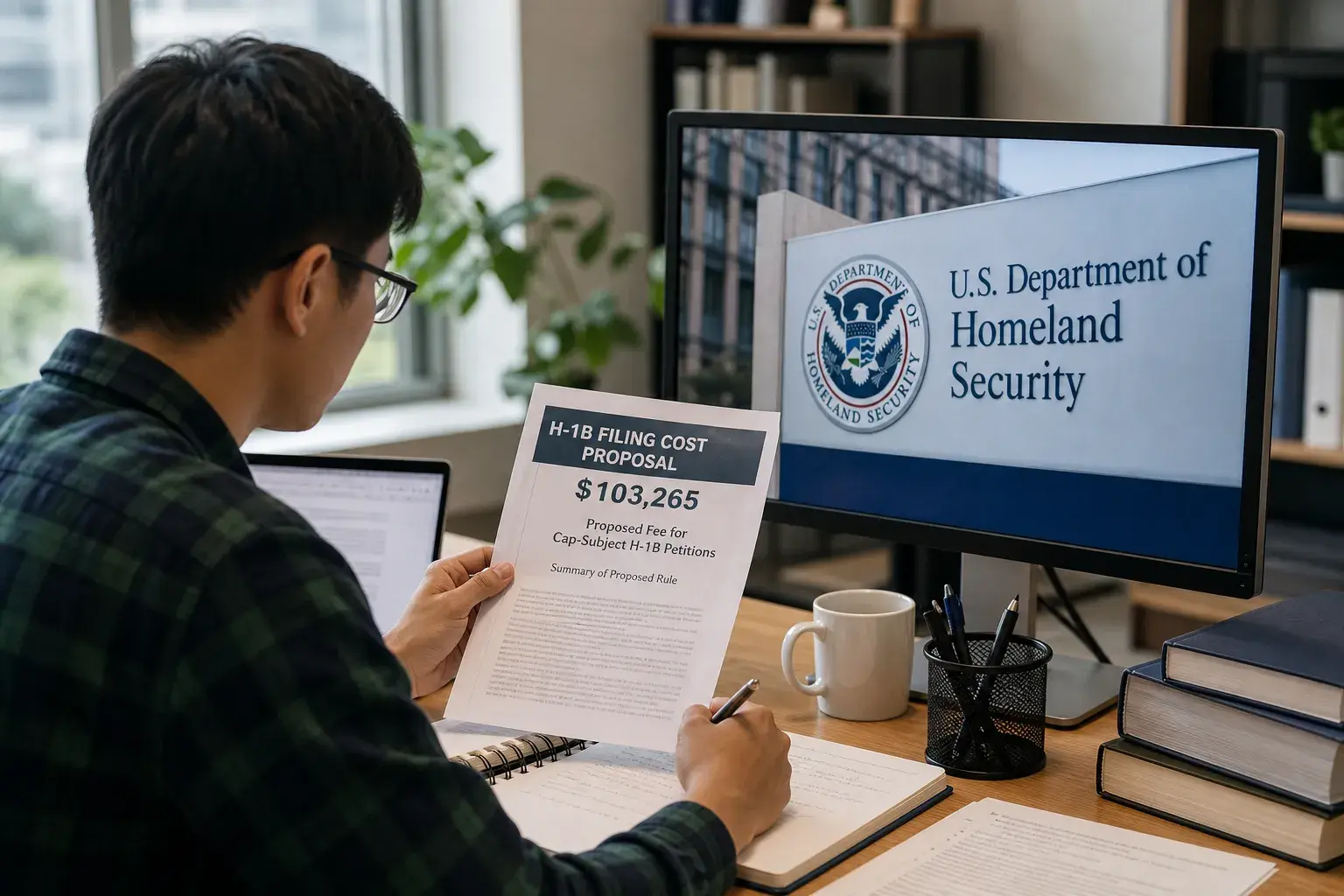
The Trump administration has proposed a $103,265 fee on cap-subject H-1B petitions, reviving its effort to sharply increase employer costs after a federal court blocked an earlier $100,000 payment requirement.
What the Proposal Covers
The Department of Homeland Security published the proposed rule on August 25, 2026. It would require employers to pay the additional fee when filing any H-1B petition subject to the annual cap, including petitions for workers eligible for the advanced-degree exemption.
The fee is not yet in effect. The proposal must go through the federal rulemaking process, including a 30-day public comment period, before DHS can issue a final regulation.
The H-1B program generally provides 65,000 places under the regular annual cap, with another 20,000 available to workers who hold qualifying advanced degrees from U.S. institutions. DHS estimates that collecting $103,265 for 85,000 petitions would generate approximately $8.8 billion annually.
A Different Legal Approach
President Donald Trump’s September 19, 2025, proclamation imposed a $100,000 payment on certain H-1B workers applying from outside the United States. The administration said the policy was intended to protect U.S. workers and address alleged misuse of the visa program.
On June 8, 2026, U.S. District Judge Leo Sorokin vacated guidance implementing that requirement. He concluded that the policy functioned as a tax imposed without the necessary authority from Congress. The administration appealed, but the First U.S. Circuit Court of Appeals declined to pause the ruling while the appeal proceeds.
The new proposal relies on separate provisions of immigration law that DHS says authorize it to set fees for immigration services and recover government costs. It also follows the standard notice-and-comment process rather than imposing the payment through a presidential entry restriction.
Who Could Be Affected
The proposal would reach many workers already in the United States. That includes international graduates seeking to change from F-1 student status to H-1B status after an employer’s registration is selected under the annual cap.
Employers would pay the $103,265 charge in addition to existing filing fees. However, cap-exempt H-1B petitions would not face the new charge. This generally protects qualifying universities, affiliated nonprofits, nonprofit research organizations and government research organizations from the proposed fee.
DHS says the revenue would support immigration adjudications, fraud detection, security screening, immigration courts, consular processing and labor enforcement across several federal agencies. Business groups argue that a six-figure charge could make H-1B sponsorship unaffordable for startups and smaller employers.
This article provides general information and does not constitute legal advice. Employers and visa applicants should monitor the rulemaking process and consult qualified immigration counsel about individual cases.
Sources
- H-1B Visas: Why Trump Wants $103,000 Fee After Previous Policy Was Struck Down — Bloomberg (August 25, 2026)
- Fee for Certain H-1B Petitions — Department of Homeland Security and Federal Register (August 25, 2026)
- Federal Judge Strikes Down Trump’s $100,000 Fee on New H-1B Visas — Associated Press (June 8, 2026)

Share

Tech Industry Pushes Back on Proposed $103,265 H-1B Fee
DHS Proposes $103,265 Fee for Cap-Subject H-1B Petitions

No Comments Yet
Let us know what you think